42
The Lake That Changes Color Three Times a Day
2025
Catalogue
- Projects & Case Studies
Intro
High in the far northwest of Nepal, past apple orchards, forgotten villages, and trails that very few foreigners ever walk, there is a lake so impossibly blue it feels like a mistake. Like someone spilled the sky.
Description
Nepal is famous for mountains. Everyone knows that. Everest, Annapurna, Langtang the names roll off the tongue like old friends. But ask most travelers about Rara Lake, and you’ll be met with a blank stare, a polite nod, maybe a “isn’t that somewhere in the west?”
Yes. It is somewhere in the west. And that’s precisely the point.
Summary
Rara Lake known locally as Mahendra Tal, or simply the Queen of Lakes sits at an elevation of 2,990 metres above sea level in the Karnali Province of far-western Nepal. It is the largest lake in the entire country, stretching 10.8 square kilometres across, running 5 kilometres in length, nearly 3 kilometres wide, and plunging to a depth of 167 metres in places. It was declared a Ramsar Wetland Site of international importance in 2007. And almost nobody goes there. That’s what makes it magic.
A Lake That Paints Itself Differently Every Few Hours
Here’s the thing about Rara that nobody really warns you about: the colour.
You expect a lake. You get something else entirely.
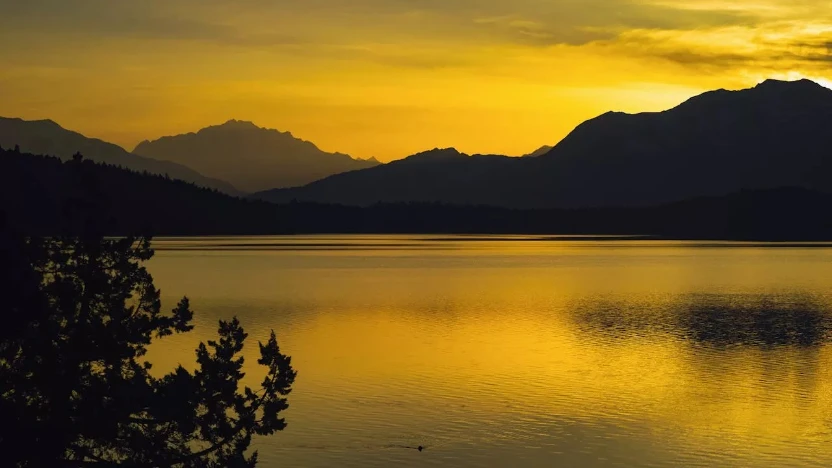
In the early morning, the water is deep, almost navy blue still, cold, eerily quiet. There’s a silence up there that feels geological, like it’s been accumulating for centuries. By mid-morning, as the sun climbs higher and light starts hitting the surface at different angles, the lake shifts greenish blue now, tropical almost, the kind of colour you’d expect in the Maldives, not at 3,000 metres in the Himalayas. By evening, as the sun drops behind the juniper-covered ridgelines, Rara goes serene again, a softer, quieter blue, the mountains and sky reflected in it like a mirror that’s been polished for millennia.
Some travellers report the lake changing colour as many as five times in a single day depending on weather and cloud cover. Every photograph you take looks like it was edited. None of them were.
Getting There Is Half the Journey
Let’s be honest with each other: Rara is not easy to reach. That’s a feature, not a bug.
The most common route goes like this a roughly one-hour flight from Kathmandu to Nepalgunj, followed by a short 35-minute hop from Nepalgunj to Talcha Airport, which is essentially a grass strip cut into the mountains. From Talcha, it’s about a two-hour trek to the lakeshore. Alternatively, many trekkers fly to Jumla and walk two to three days through remote countryside and apple orchards toward the lake.
Flights in this region run on mountain time dependent, occasionally delayed, occasionally cancelled. You will need patience. Carry extra days as buffer. But then you arrive at the lake, and you understand why nobody who goes there ever says it wasn’t worth it.
The Rara Lake trek is the antidote to every overcrowded trail in Nepal.
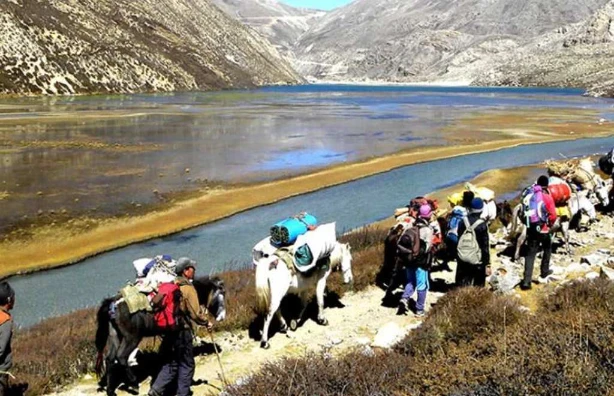
No tea house queues. No parade of headlamps at 4 AM. No Instagram crowds at the viewpoint. Just you, the trail, the forest, and occasionally the sound of a donkey caravan carrying supplies to the villages ahead.
The classic route from Jumla passes through traditional villages like Murma, Majhghatta, and Jhyari places where the Thakuri and Malla cultures remain largely intact, where Deuda folk songs drift out from homes in the evenings, and where people will stop to talk to you not because you’re a tourist but because visitors are still rare enough here to be genuinely interesting.
Walking around the lake takes about four to five hours and is one of the most peaceful things you can do in Nepal. For the best panoramas, hike up to Murma Top (3,630 metres) or push further to Chuchemara Hill (4,039 metres). From Chuchemara, on a clear day, the view is outrageous the deep blue oval of the lake below, surrounded by green-forested ridges, and behind them all, the white wall of the high Himalayas.
A Word About the People Here
Something that stays with you long after you leave Rara is not just the lake it’s the villages around it.
The communities of the Karnali region are among the most remote in Nepal. Goods reach them by aircraft to Talcha and then by donkey caravan to farther villages. Walking hours to reach a school is normal for children here. The rhythm of life is tied to agriculture, livestock, and resourcefulness born from necessity.
People here are generous and warm in the way that comes from genuine hospitality rather than the transactional warmth of a tourist zone. When you visit, spend locally. Hire a local guide. Eat at local homes when invited. The tourism money goes directly to communities that genuinely need it.
The Quiet Thing About Rara
Most lakes and indeed most famous natural places anywhere are best experienced before 7 AM or after 5 PM, before the crowds arrive. At Rara, there are no crowds to dodge. At any hour, in any weather, the lake belongs to you and the mountains and the birds.
You sit by the water. The lake changes color. A bird lands twenty feet from you. The peaks catch the last light.
And you think: how is it possible that more people don’t know about this place? Hopefully it stays that way for a while longer.
Author: Anupam Shrestha.